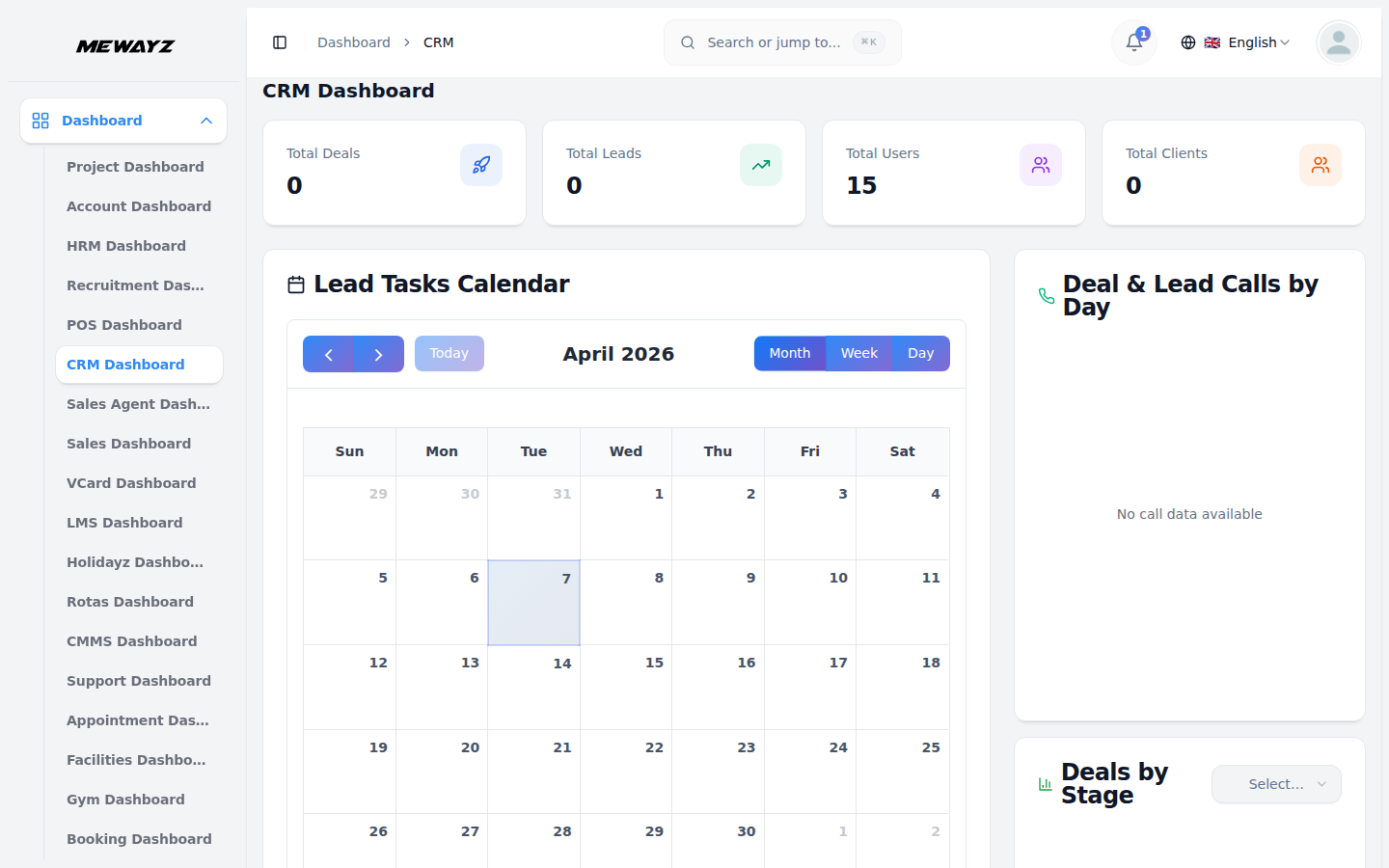
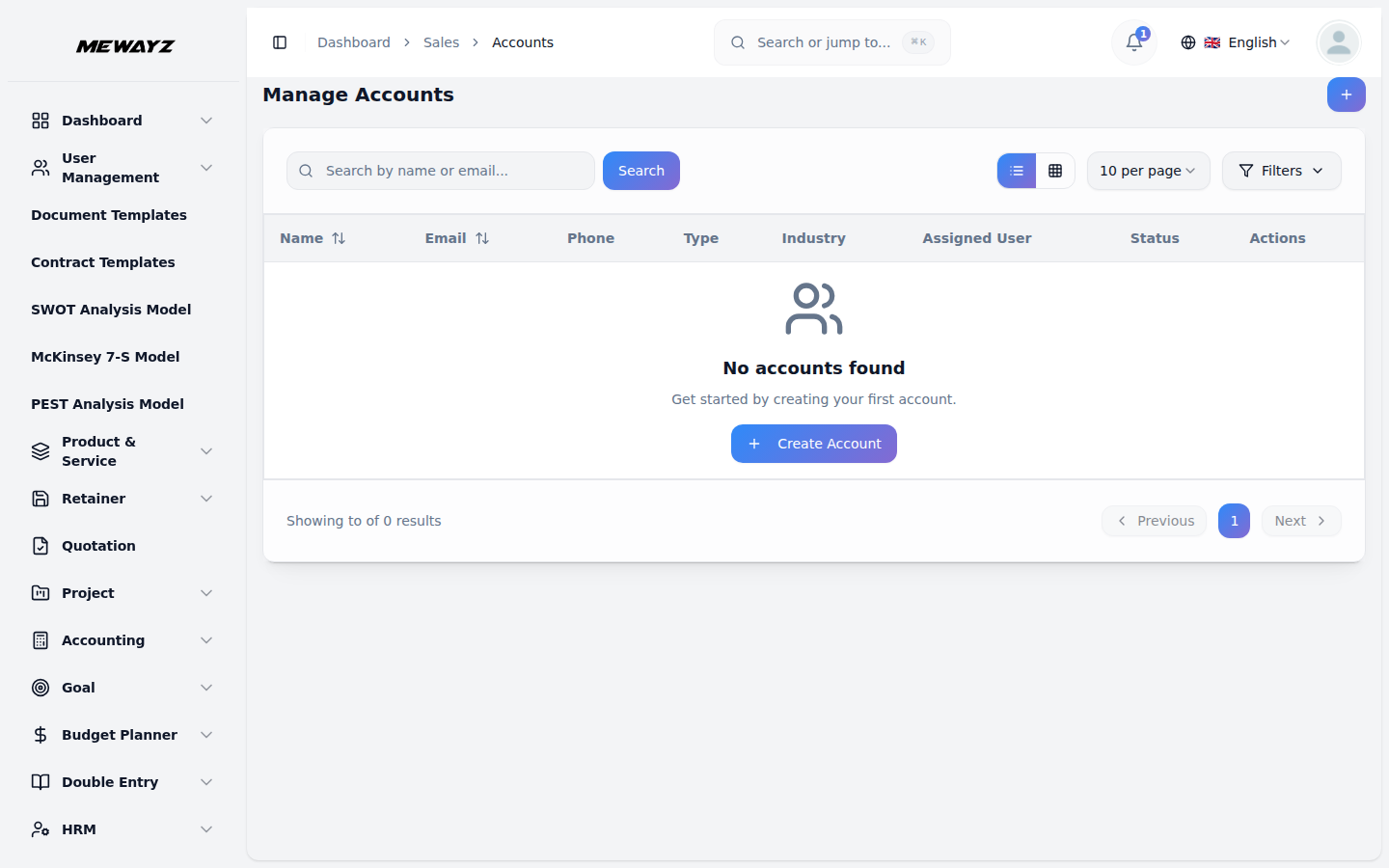
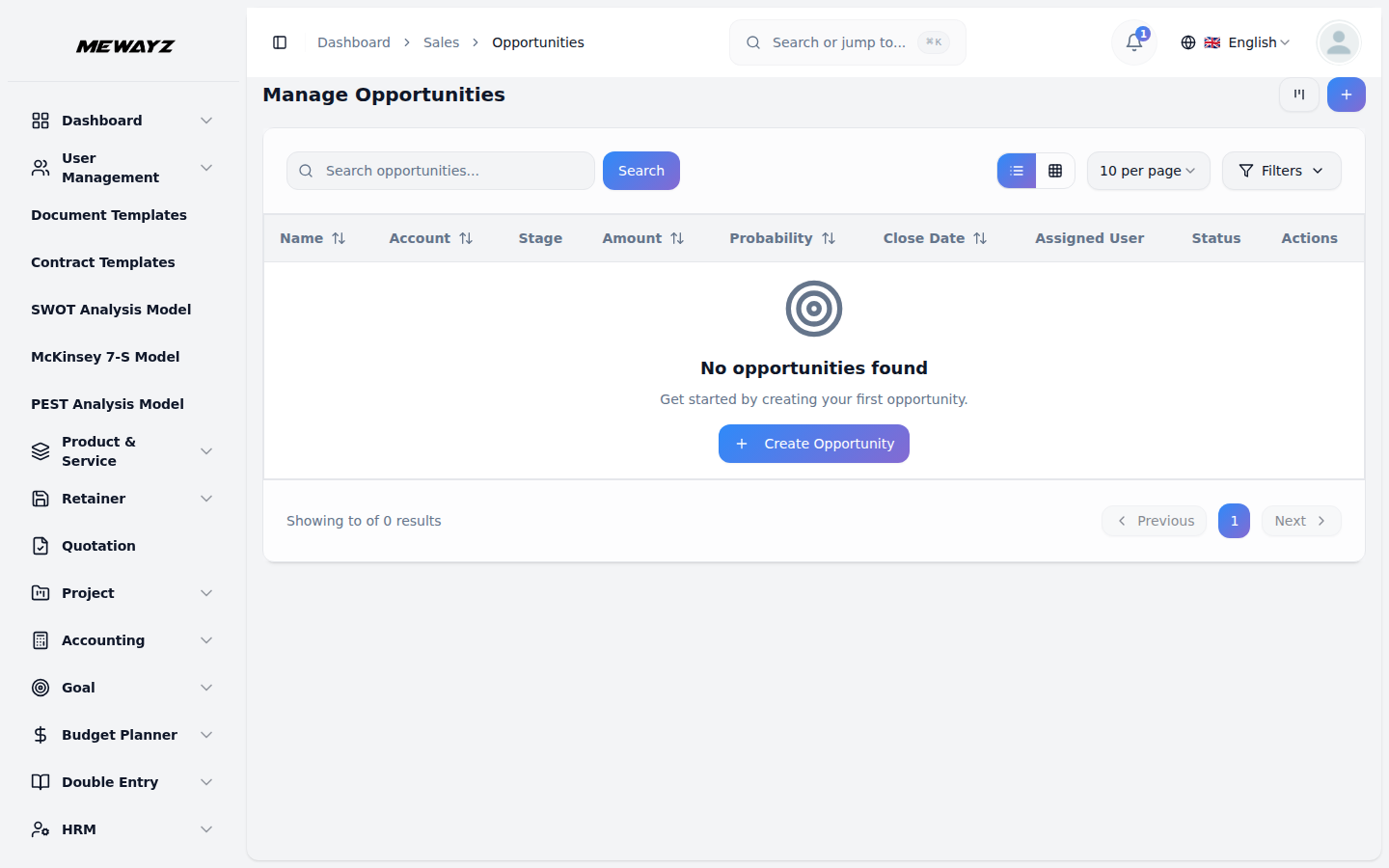
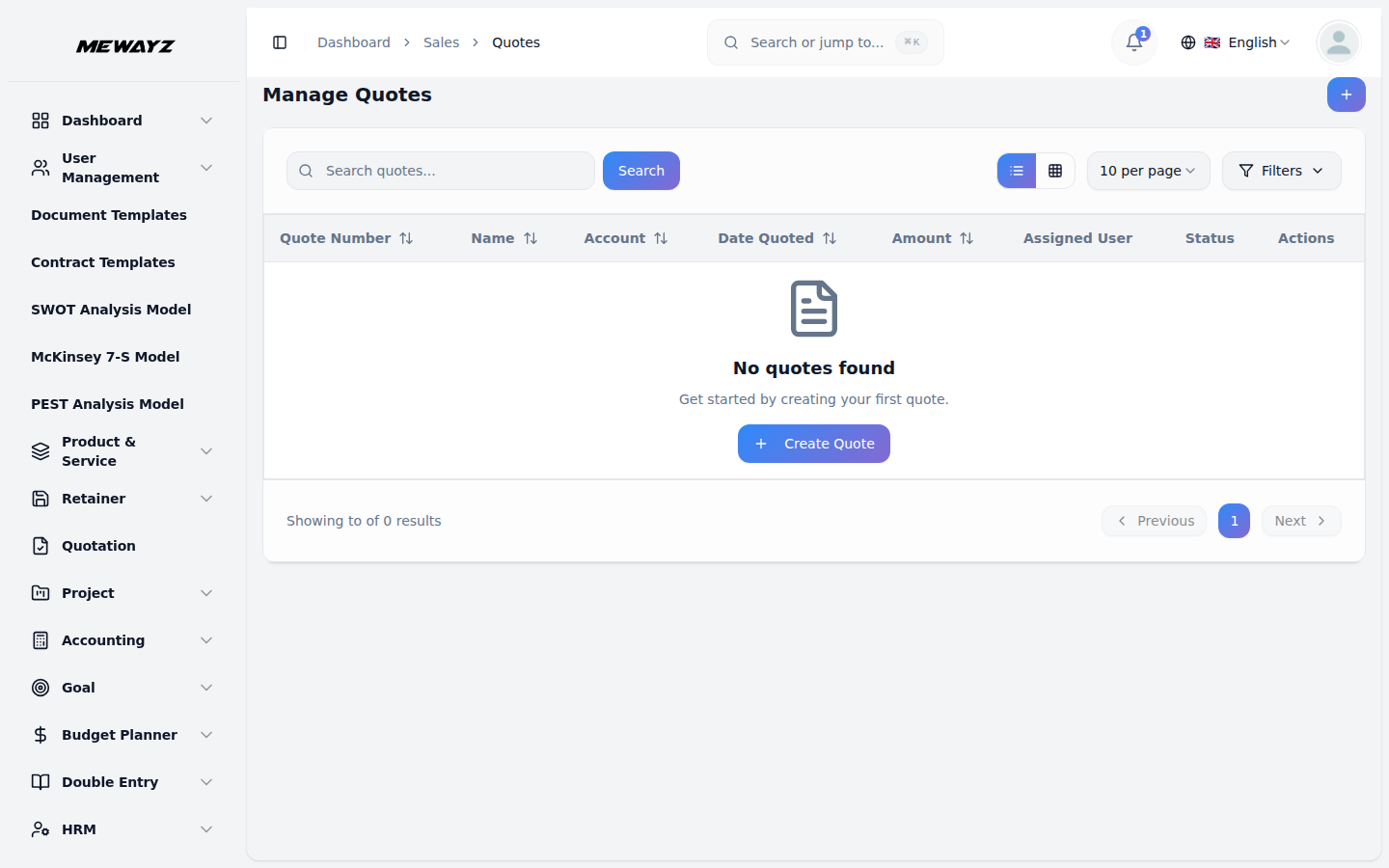
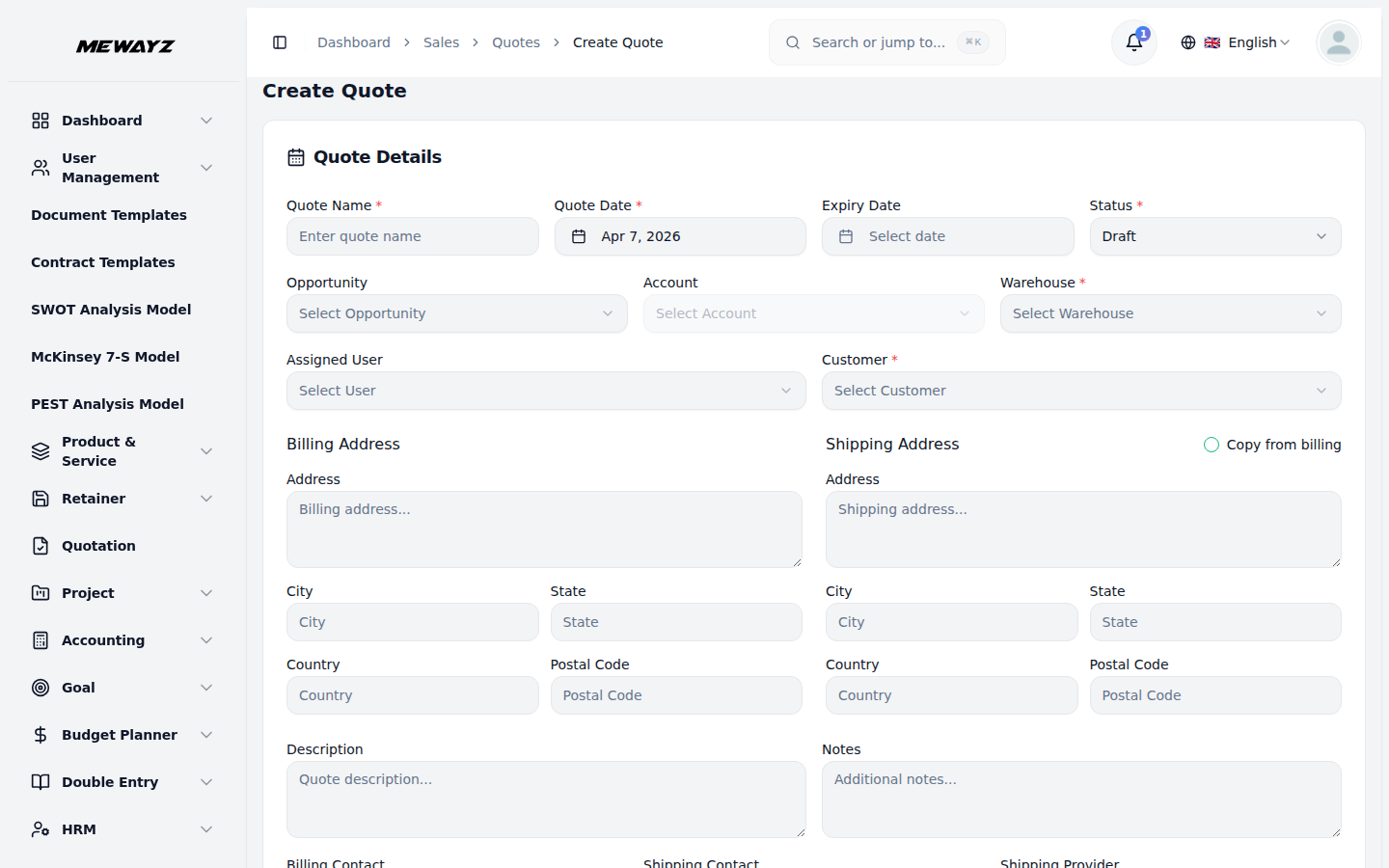
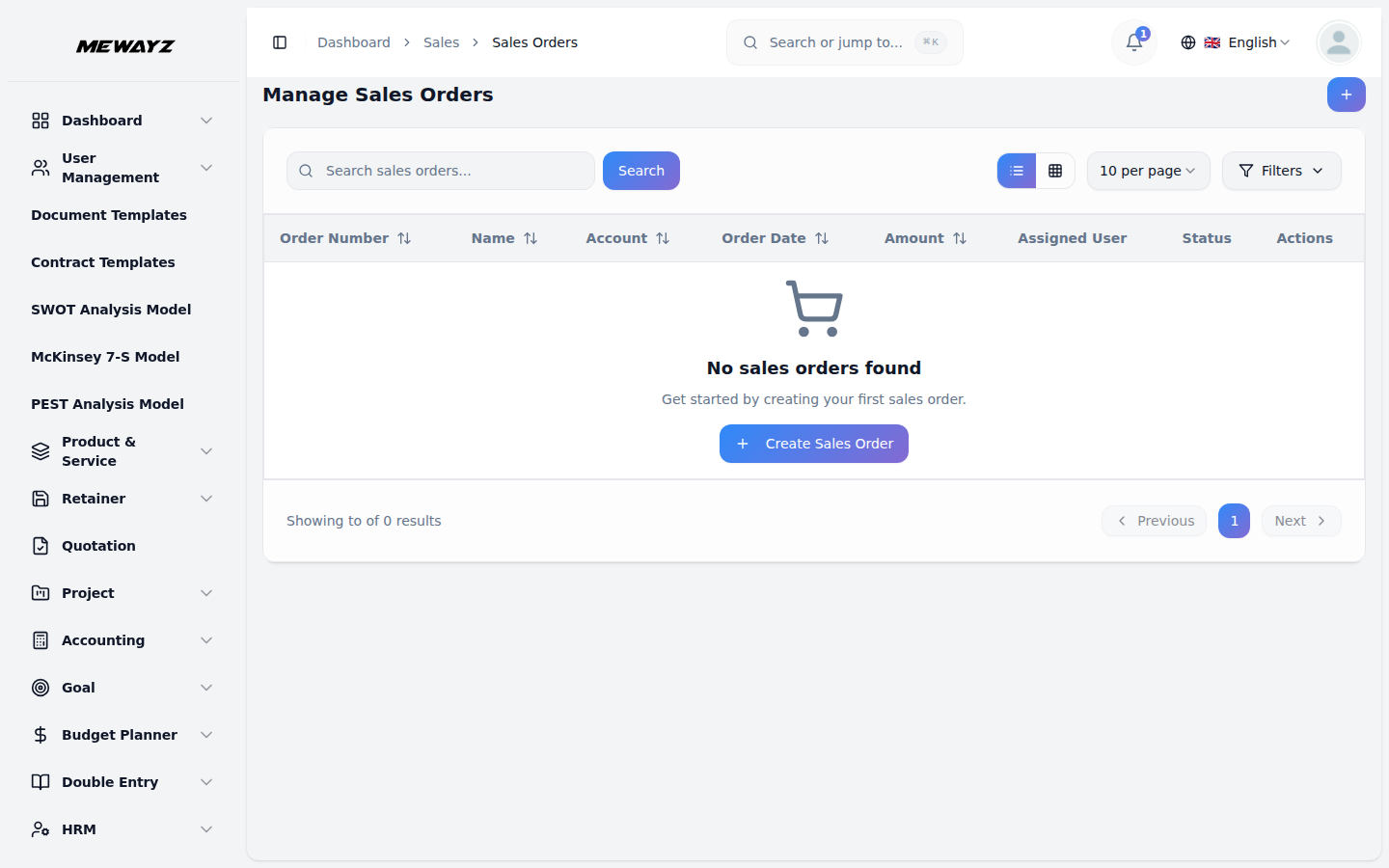
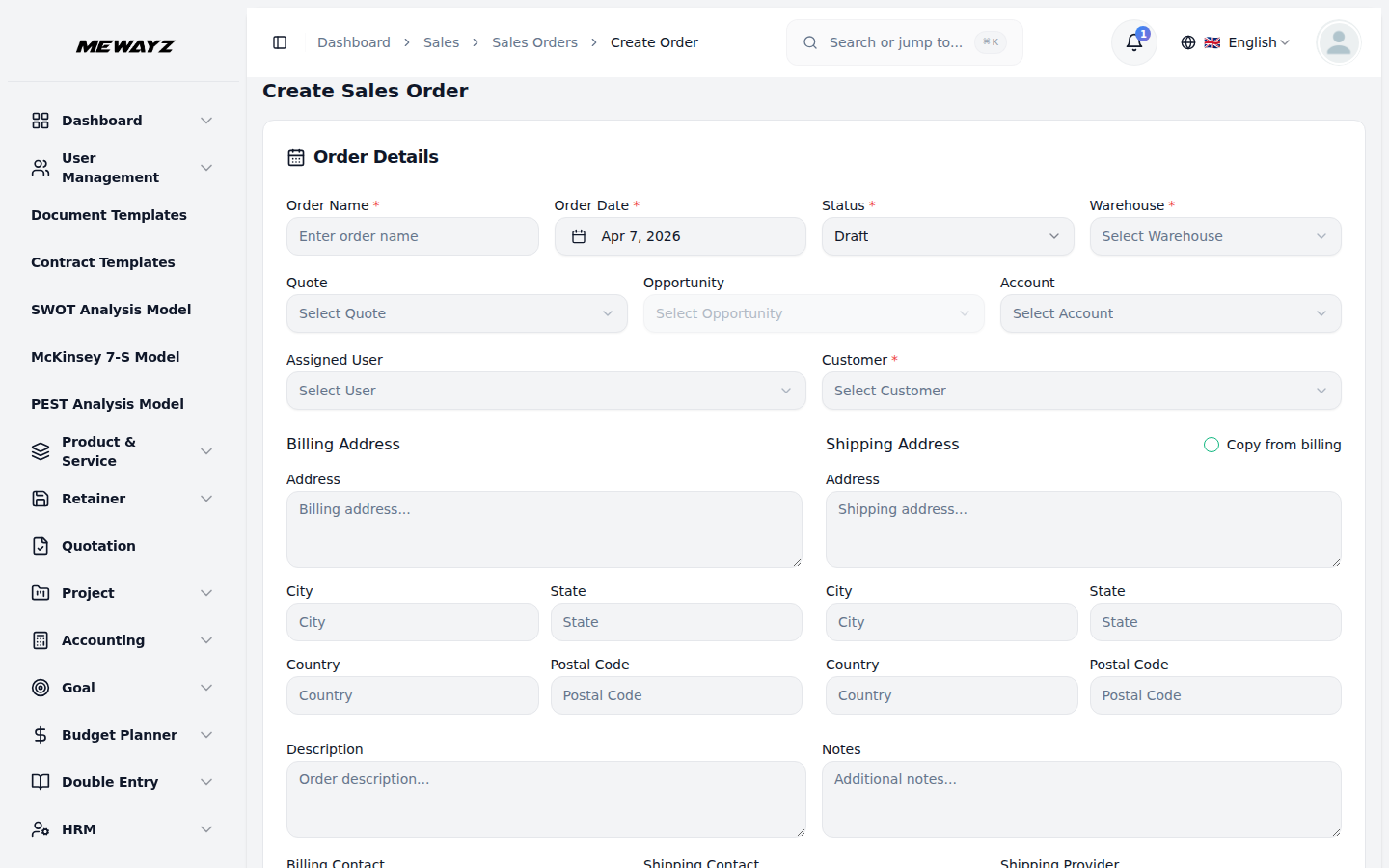
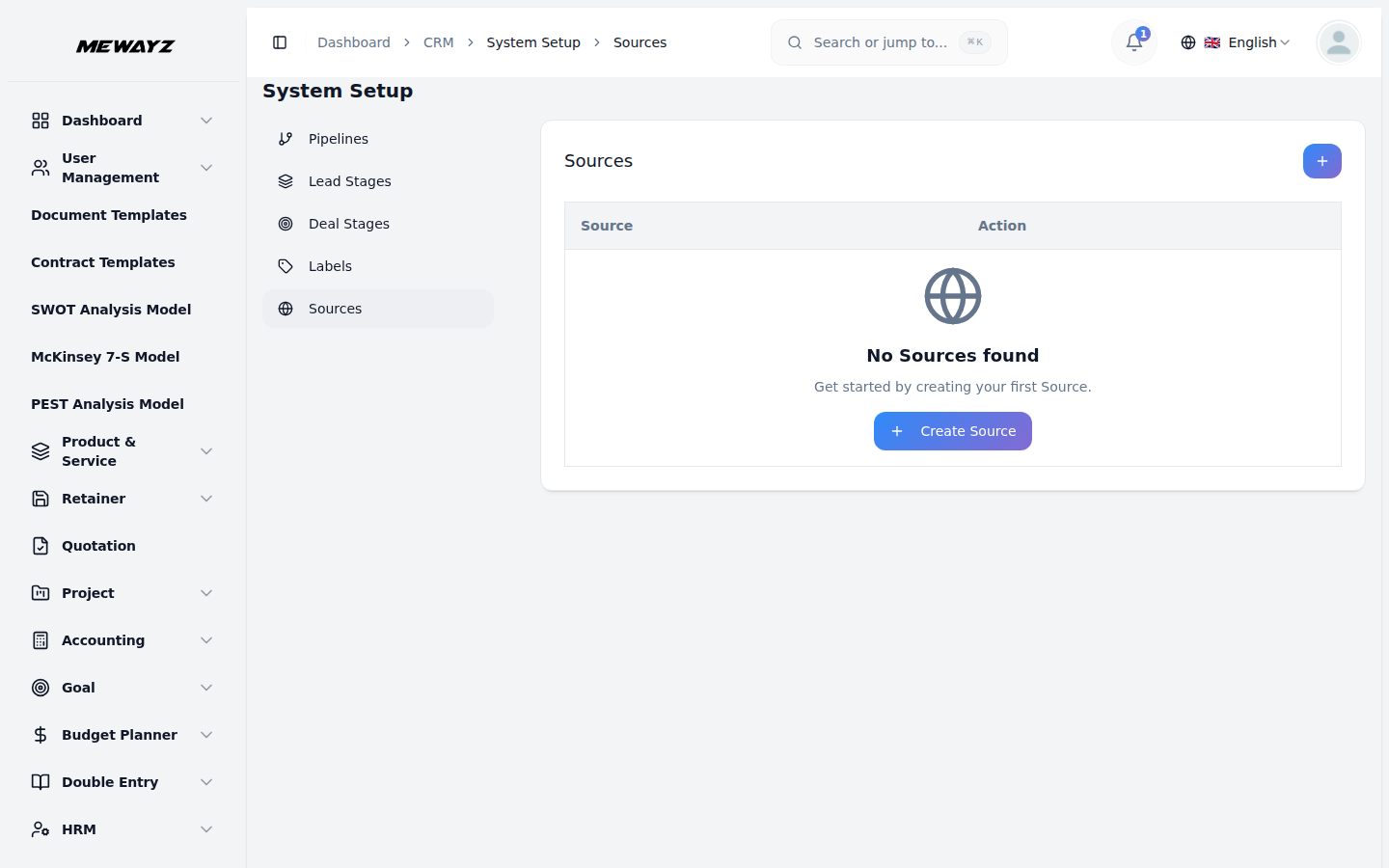
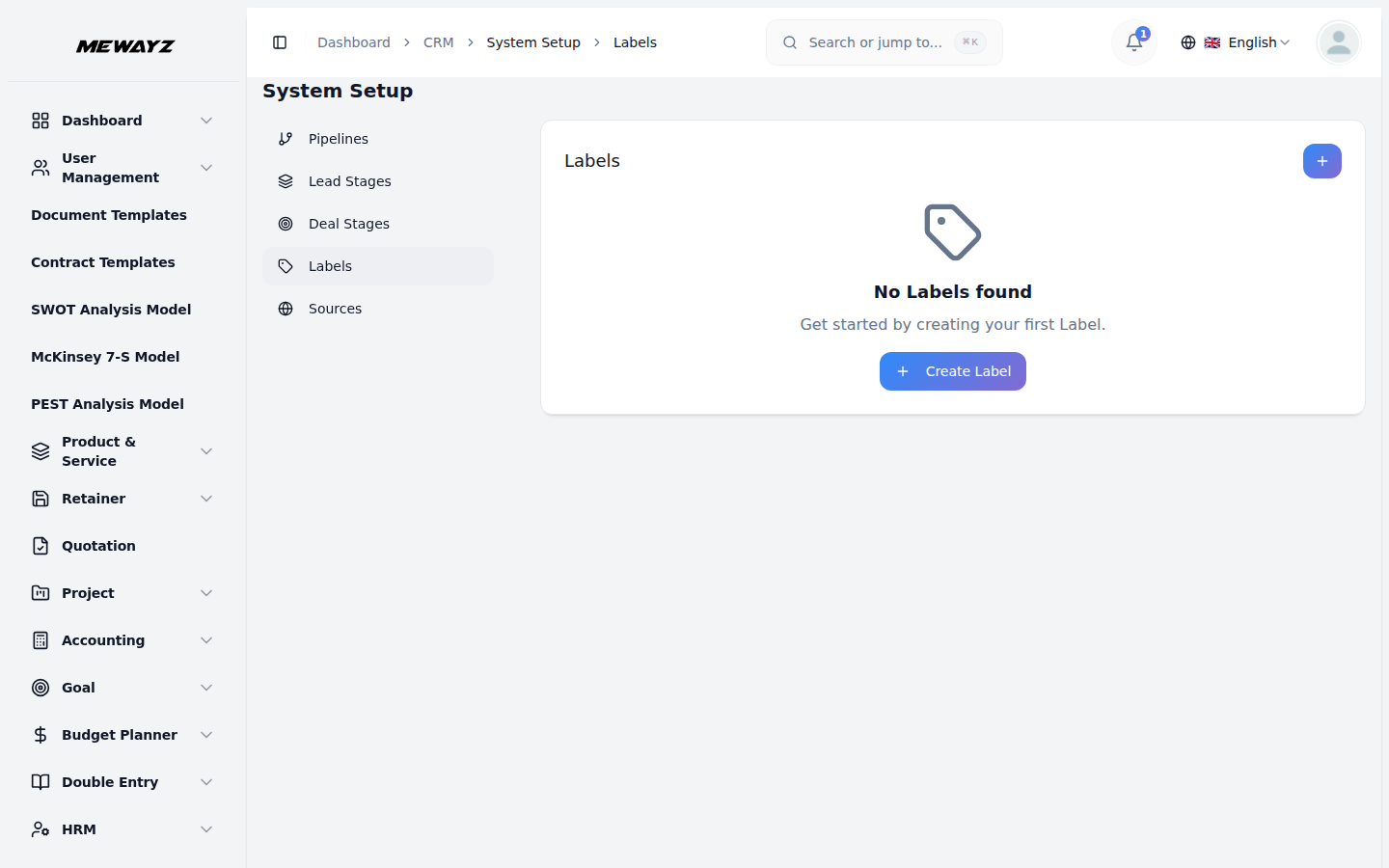
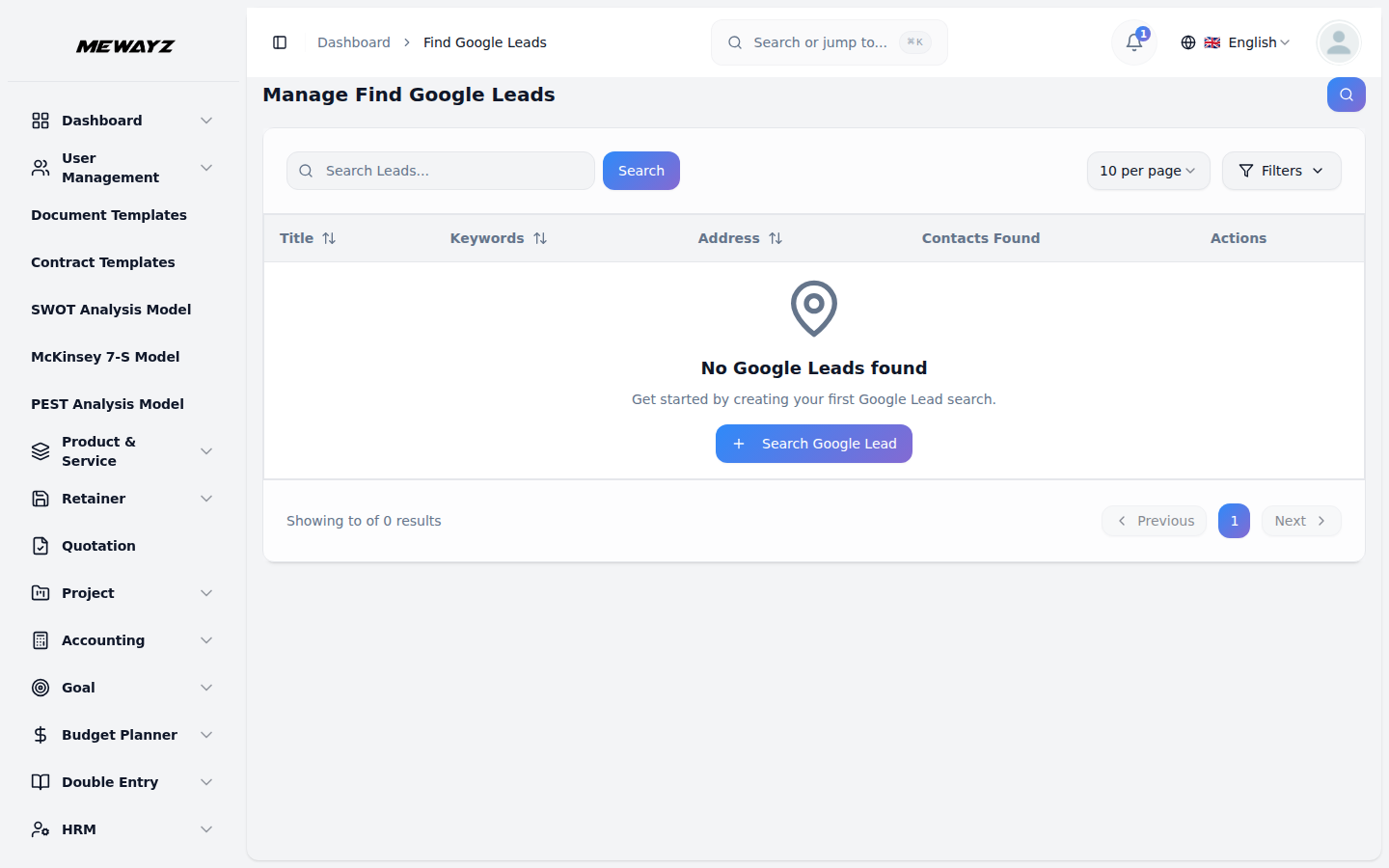
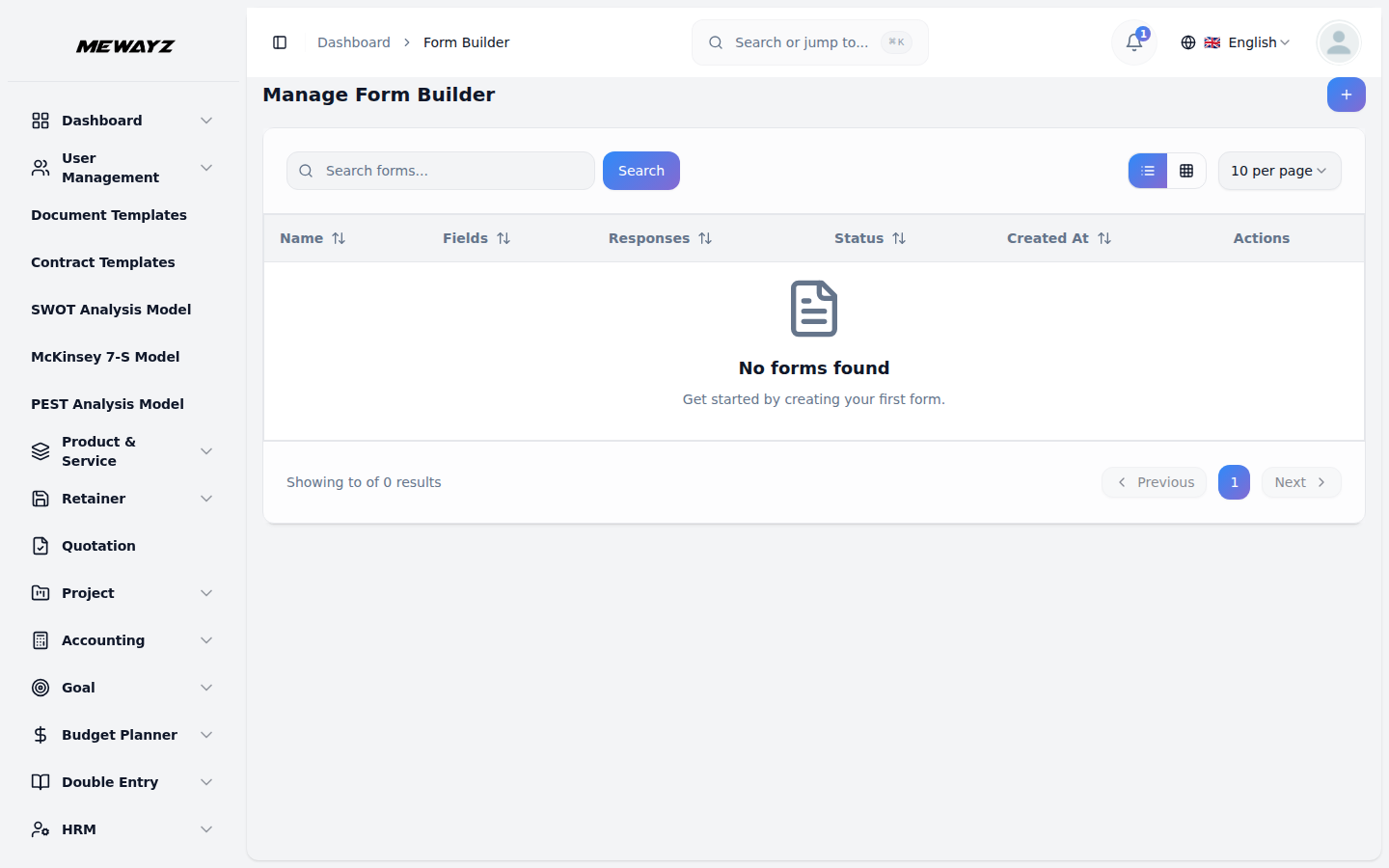
Leads, deals, contacts, calls, quotes — all in one place, and all sitting on the same database as your invoicing, your projects, and your helpdesk. A closed deal becomes an invoice without an integration layer.
The CRM ships with 18 sub-modules; most teams use these six in the first week. Each one lives next to the others — no module-to-module integration to set up.
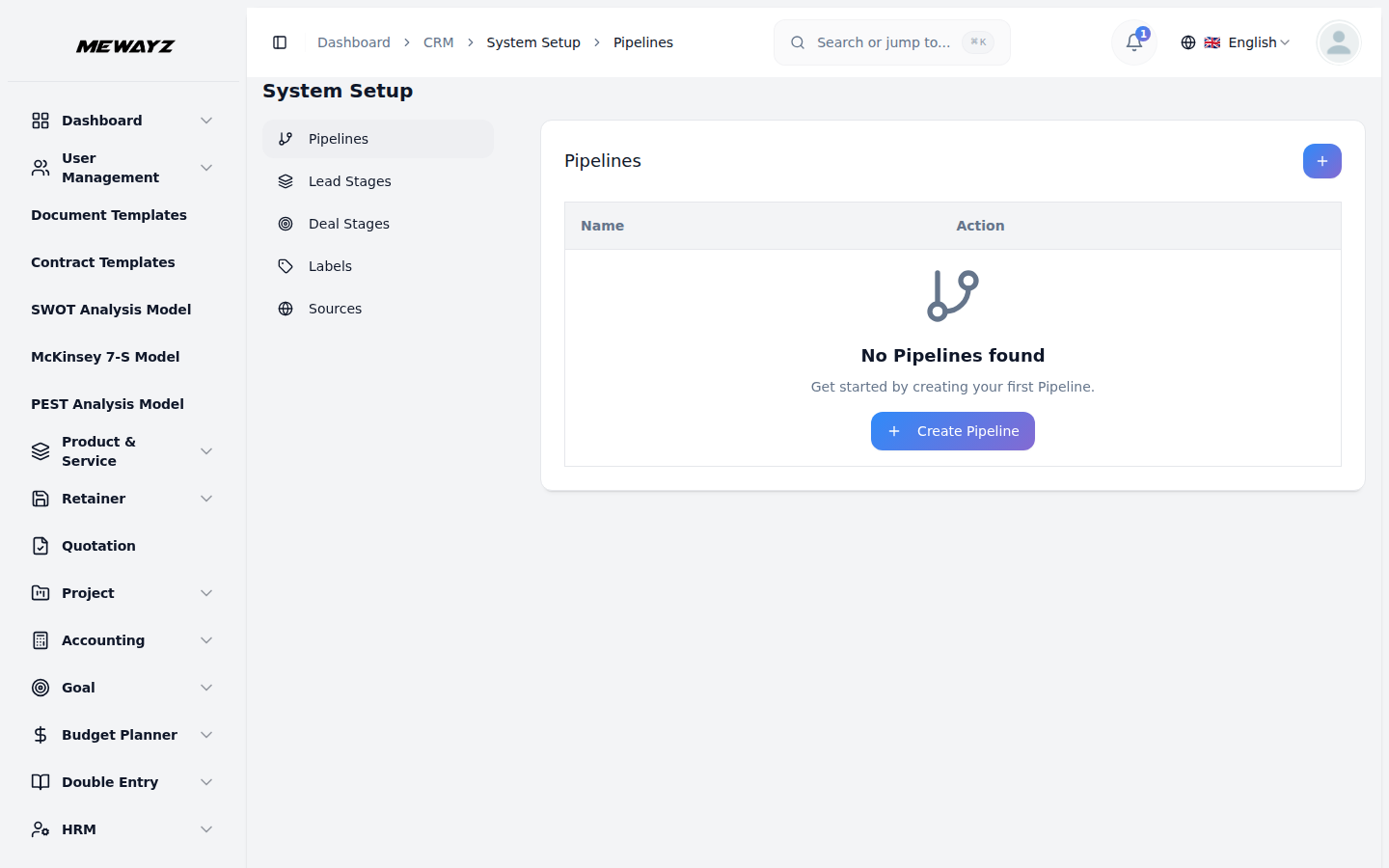
Custom stages per pipeline. Different funnels for inbound, outbound, expansion, partner. Drag-and-drop kanban, list, or forecast view. Velocity and conversion measured per stage.
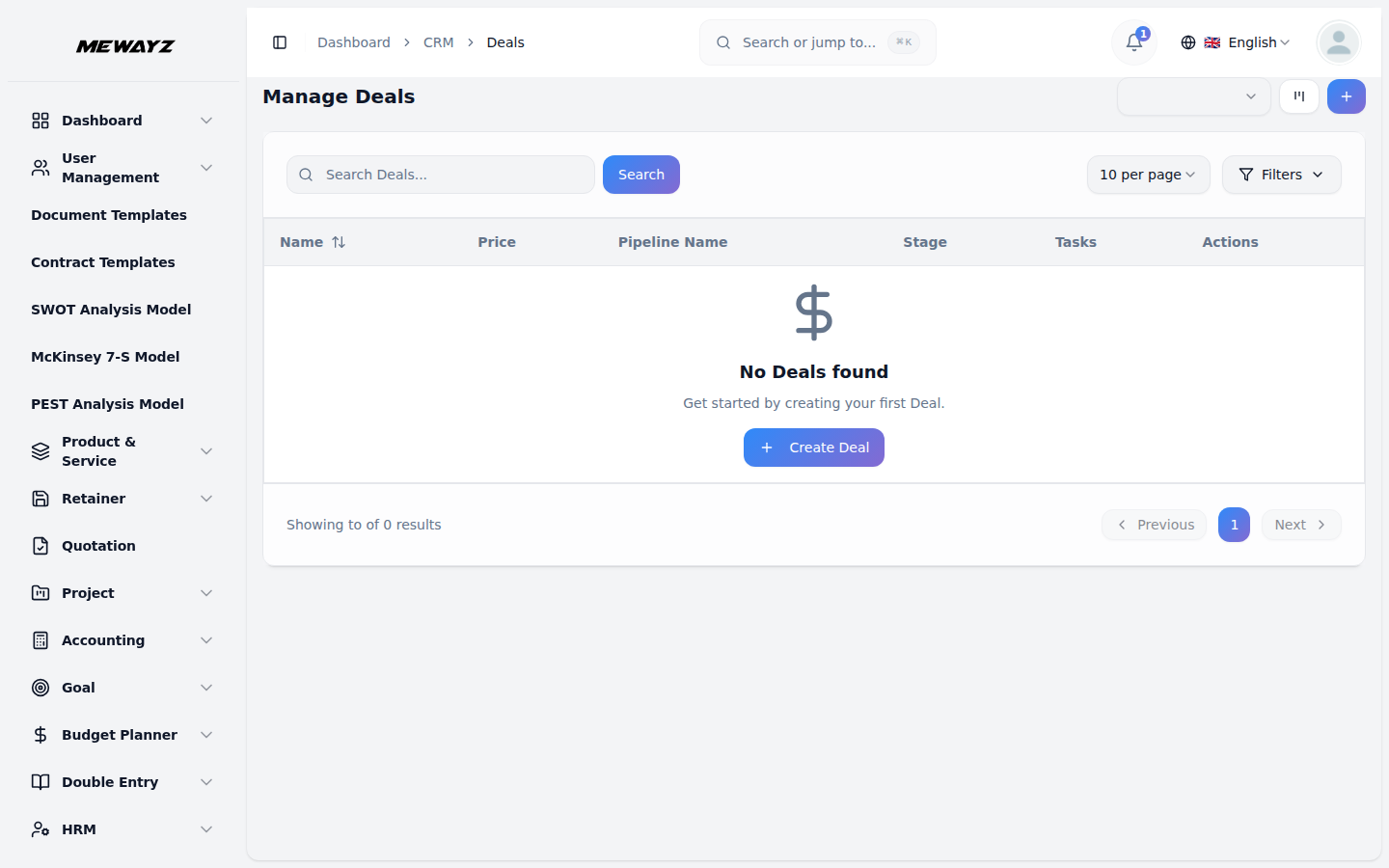
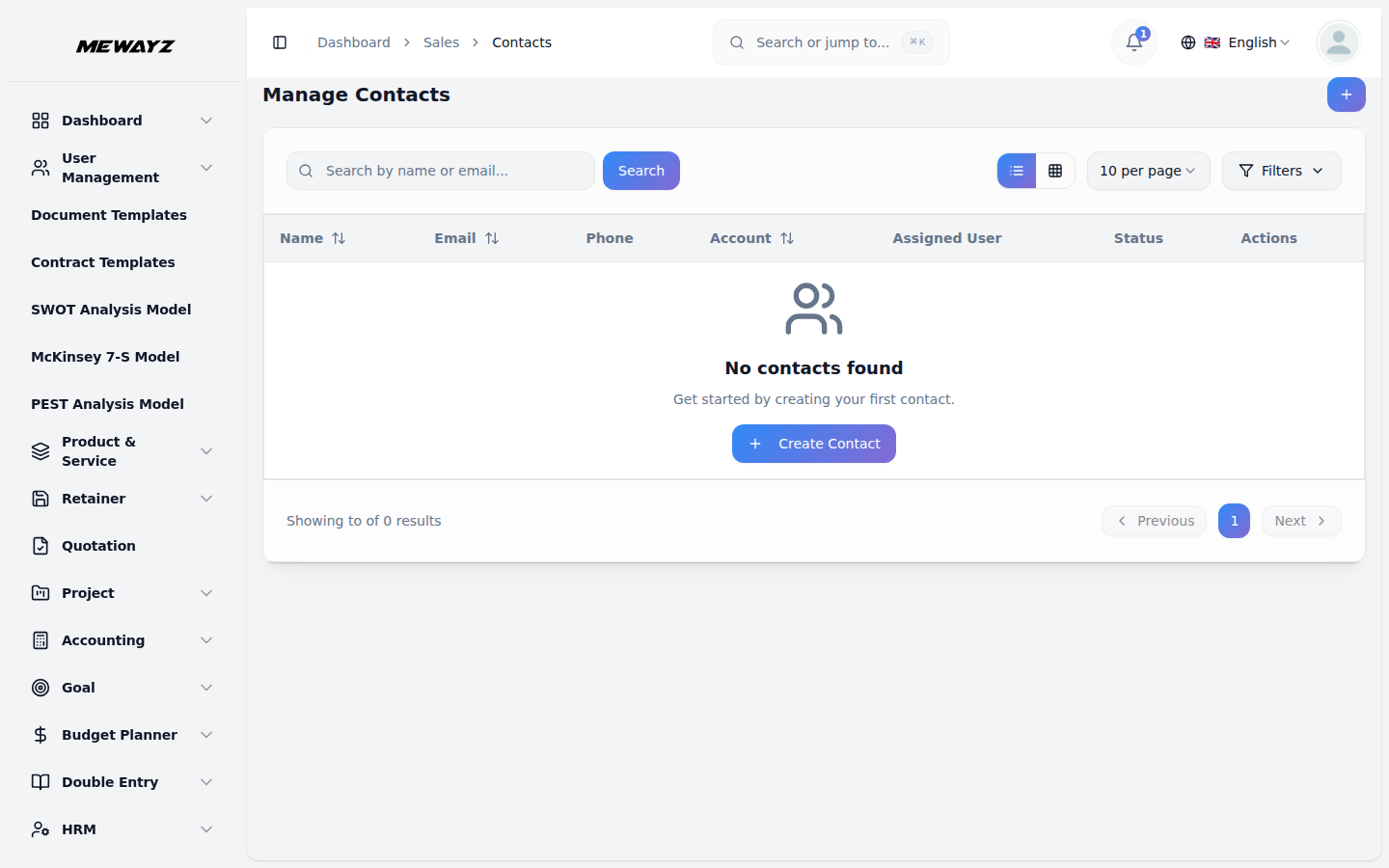
Every deal opens with the contact's prior deals, invoices, projects, and support tickets in the sidebar. Your reps stop asking the customer "remind me what you bought from us?"
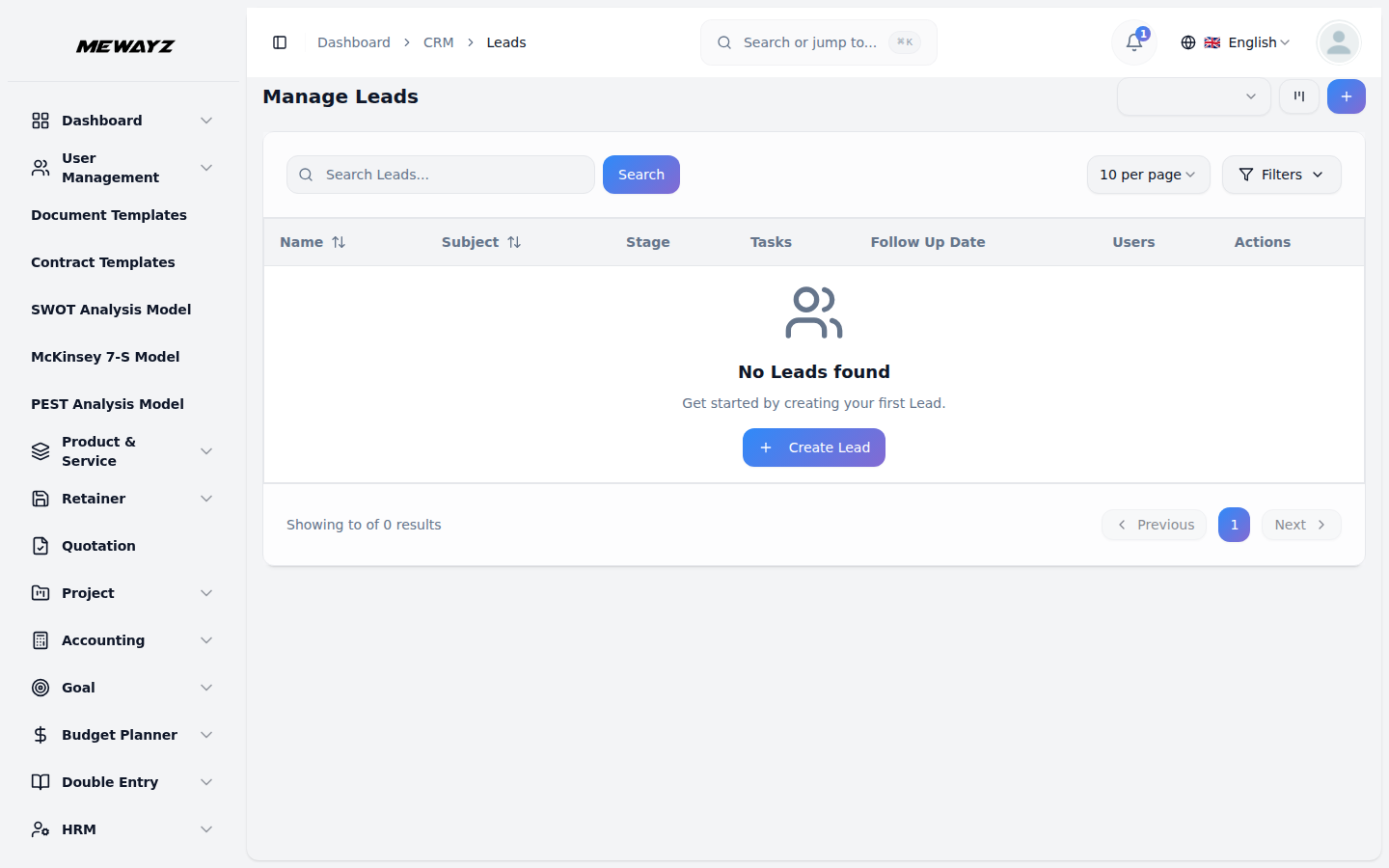
Webform submissions, prospecting lists, partner referrals, manual entries — every lead lands in one place, gets scored, and routes to the right rep. The SDR funnel doesn't need its own product.
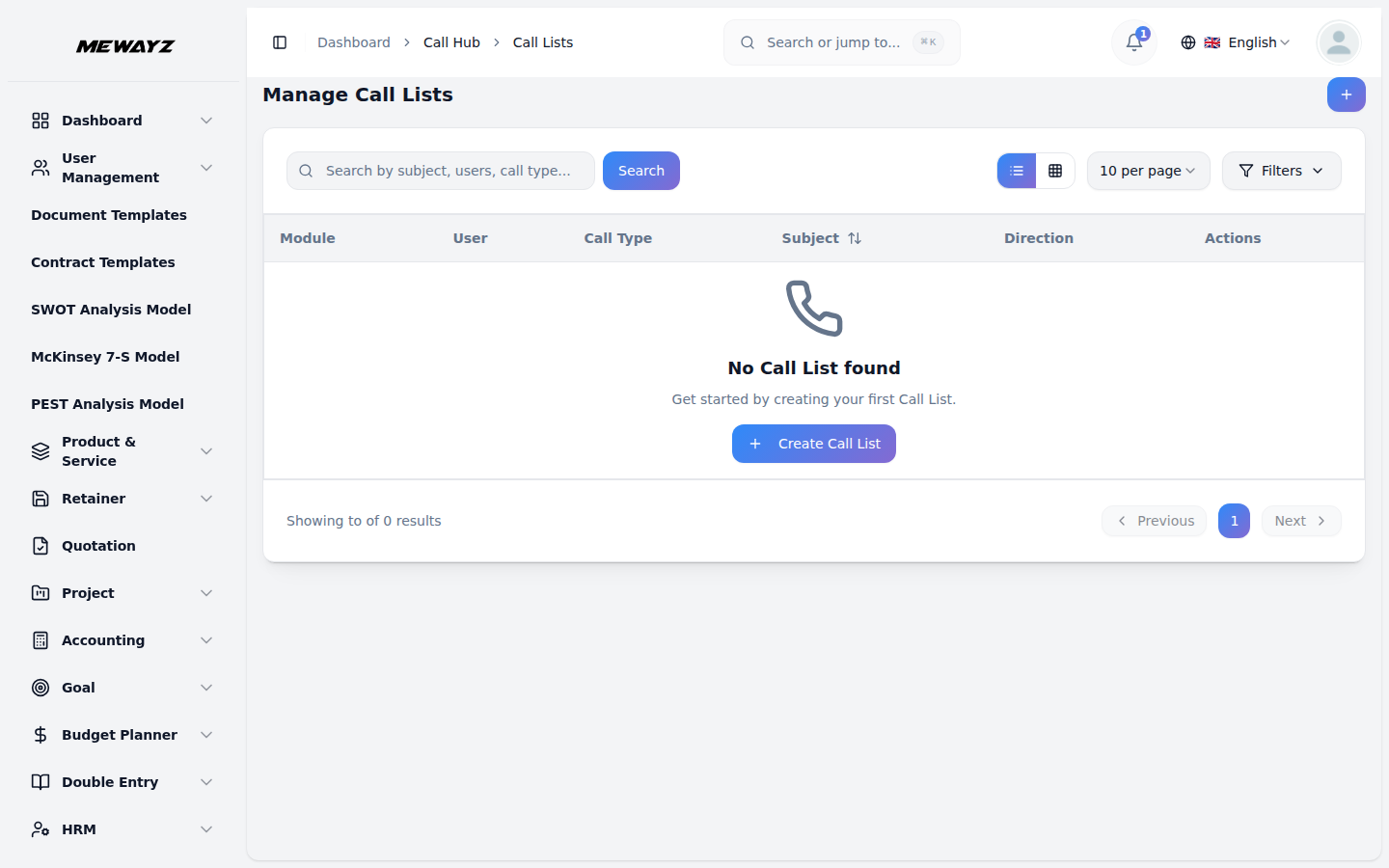
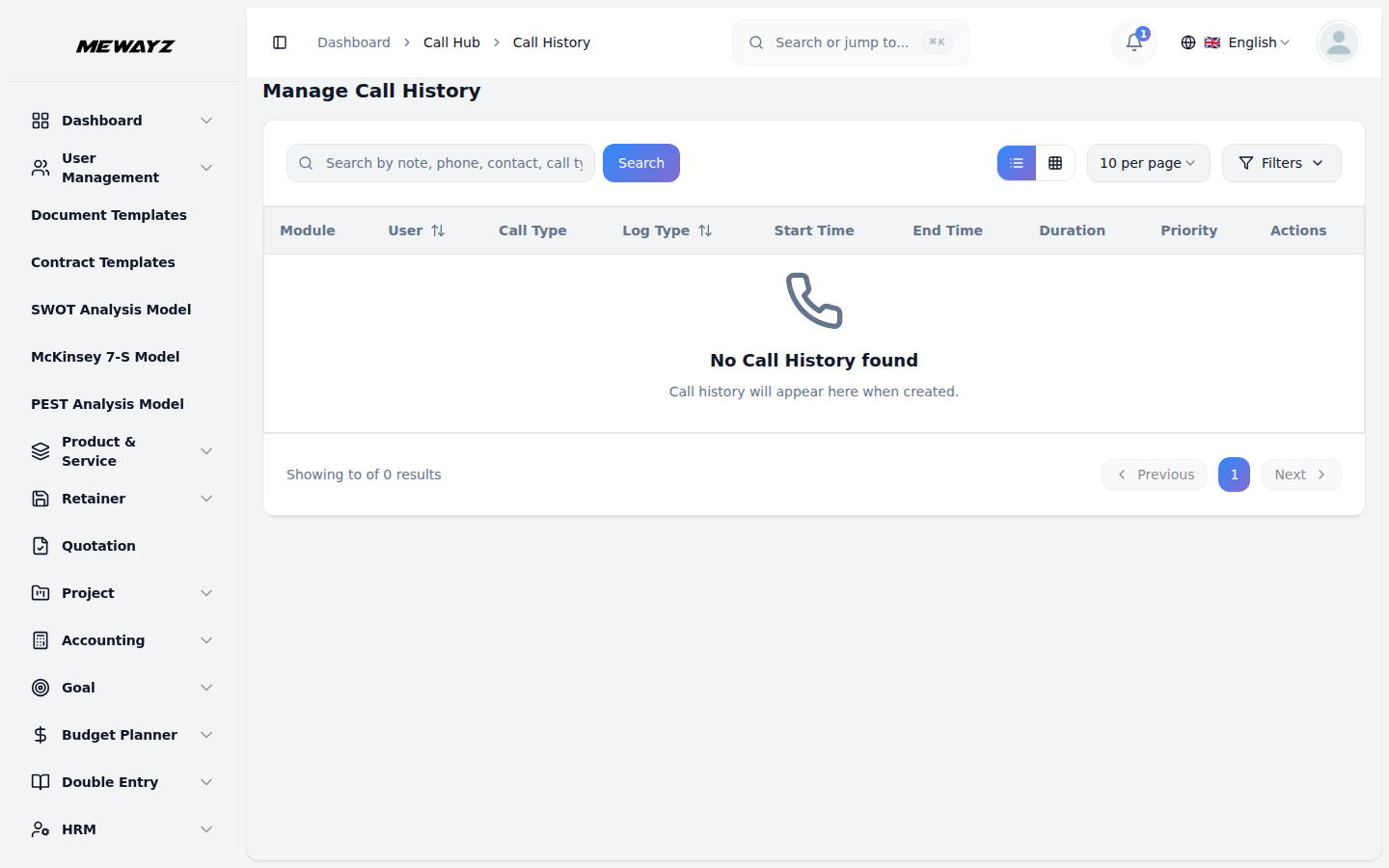
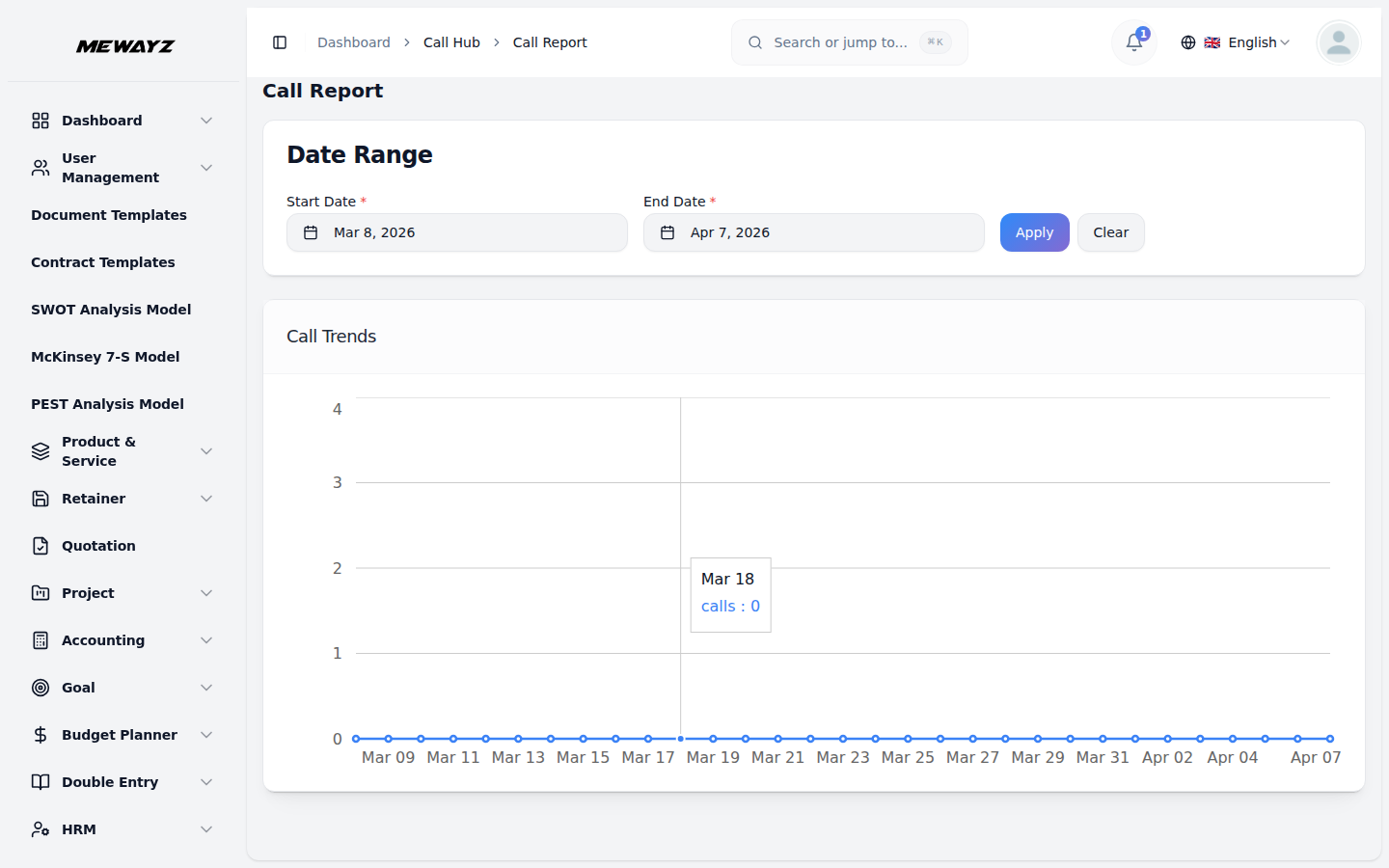
Click-to-dial, talk-time tracking, call recording (where compliant), auto-disposition codes. Every call posts to the contact + deal record without anyone typing notes.
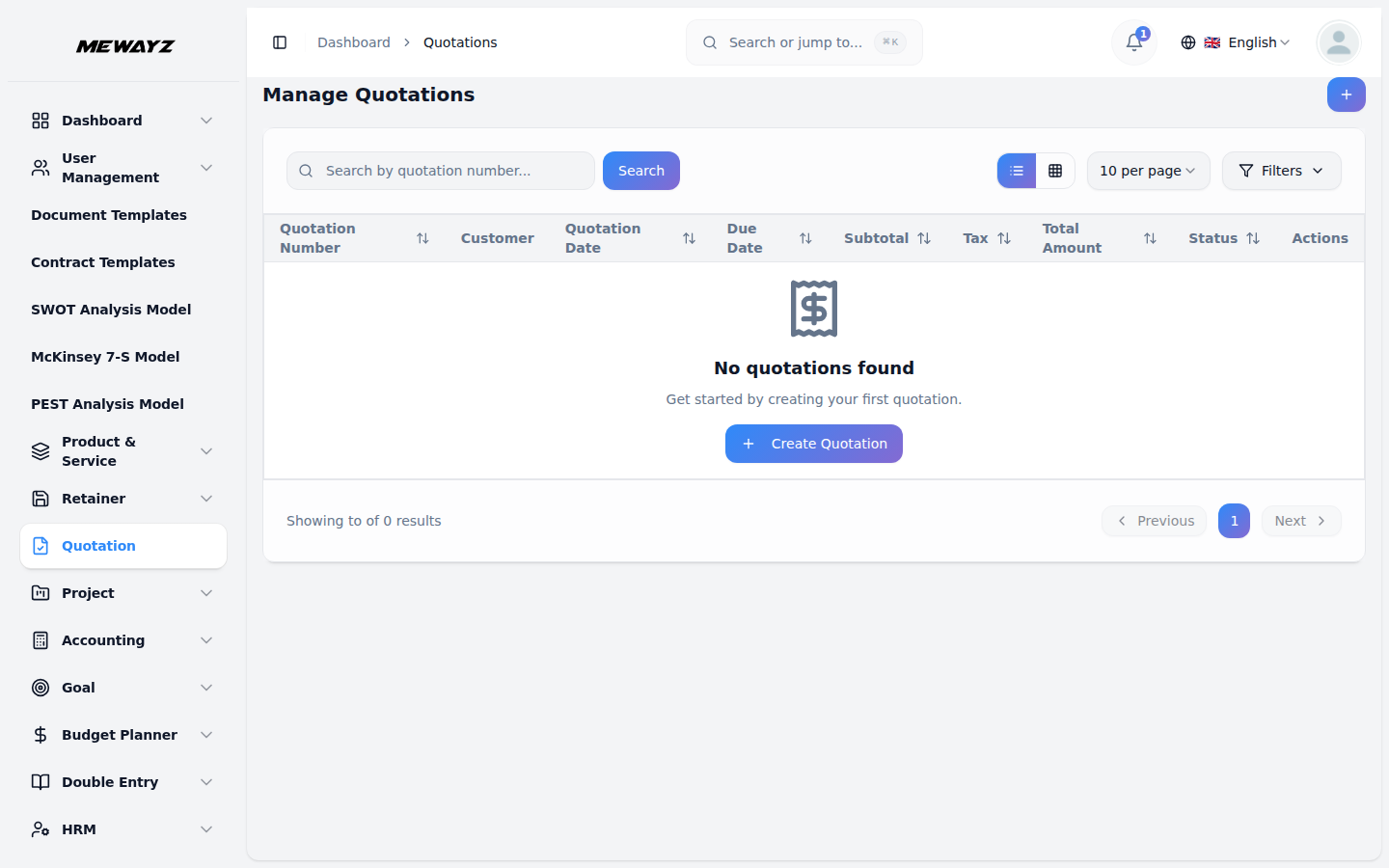
The accepted deal flows into a branded quote. The signed quote becomes an order. The fulfilled order is the invoice. Same record. No "sync to QuickBooks" — accounting is two clicks away in the same product.
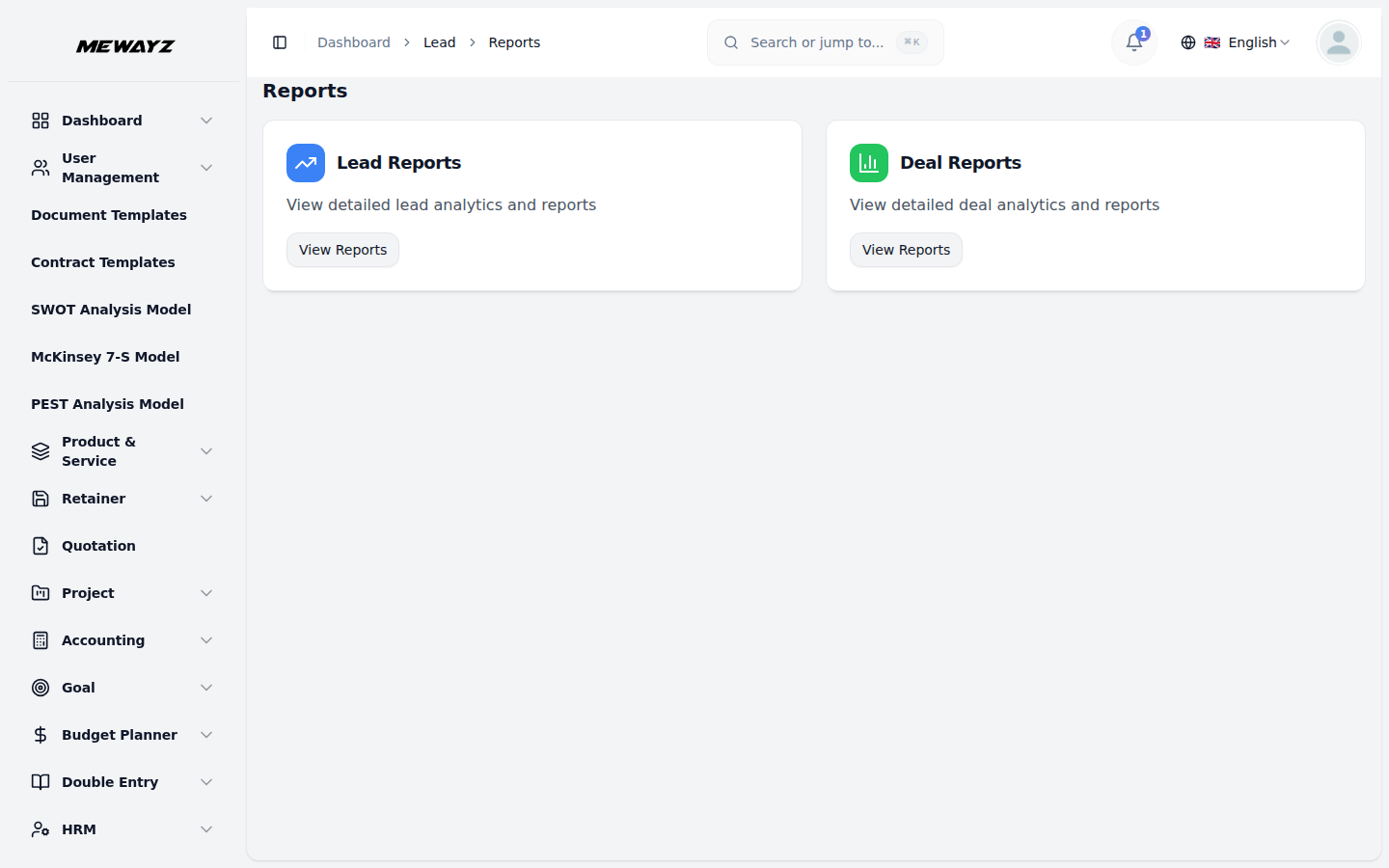
Funnel, velocity, source ROI, win/loss reasons, by rep, by team, by quarter. Built around the questions sales managers ask on Monday, not a generic dashboard library.
The CRM module ships with these views out of the box. None of them are paid add-ons. None of them require setup beyond the data import.


The CRM is good on its own. It's better next to the modules it shares a database with.
Each module in CRM & Sales is a full page of its own — open any one to see what it does and the exact tool it replaces.
Start free with VCard & Link-in-Bio. Upgrade to Business ($149/mo flat) when you need the CRM and the other 149 modules behind it.